What Is Risk Management? A Practical Guide for Modern Businesses
Introduction to Risk Management
Risk management is the proactive process of identifying and mitigating threats that could prevent an organisation from achieving its goals. Put simply, management is the process of identifying, assessing, and controlling risk across financial, operational, cybersecurity, and strategic areas.
This guide focuses on practical, business-oriented risk management in 2024–2026, with emphasis on cyber and operational risk for SMEs. Effective risk management improves decision making, reduces financial losses, and builds resilience against unforeseen events. At ERP Software Management (ERPSM), we help organisations embed cyber risk management into broader enterprise risk practices.
What this article covers:
- Key types of risk and why risk management matters beyond compliance
- Core risk management strategies and the risk management framework aligned with ISO 31000
- The step-by-step risk management process, from risk identification to risk monitoring
- How cyber and third-party risk management protects modern businesses
What Is Risk Management and Why It Matters
In business terms, risk means potential events-positive or negative-that could affect objectives such as revenue, uptime, data confidentiality, or regulatory compliance. Risk management identifies, assesses, and addresses organisational risks to keep them within acceptable thresholds defined by risk appetite and risk tolerance.
Risk analysis (understanding likelihood and impact), risk assessment (scoring and comparing), and risk treatment together form the process of identifying, assessing, and controlling potential threats. Organisations face various risks including financial, operational, and reputational risks:
- Financial risk includes credit and liquidity risks-e.g., cash flow problems, currency swings affecting a South African exporter, or fraud causing direct financial losses and threatening financial stability.
- Operational risks arise from internal and external threats: system outages, staff errors, process breakdowns disrupting service delivery.
- Cybersecurity risks include data breaches and cyberattacks-ransomware, AI-powered phishing, and vendor-related security breaches. In the UK, 43% of businesses reported a cyber breach in the past year.
- Compliance risks involve failing to follow laws and regulations, such as POPIA, GDPR, or PCI DSS, leading to penalties and forced disclosures.
- Reputational risk can arise from negative publicity or customer dissatisfaction after a data breach or service failure.
Why is risk management important beyond regulatory compliance? It supports strategic decision making, protects stakeholder confidence and trust, and enables sustainable growth. Effective risk management protects organisational objectives and assets. Proactive risk management minimises the impact of potential threats and helps organisations avoid financial losses from litigation and reputational damage. For SMEs, a single serious risk event can combine business risk, compliance risks, and negative outcomes simultaneously. Organisations with risk management see a higher probability of meeting objectives-and risk management helps organisations comply with legal and regulatory standards.

Core Principles and Strategies of Effective Risk Management
ISO 31000 is a globally recognised risk management standard that outlines principles for identifying, analysing, evaluating, treating, and monitoring risks continuously. Risk governance integrates risk management into organisational strategy and culture, requiring leadership commitment and continuous improvement. The distinction matters: risk analysis examines likelihood and impact, while risk evaluation determines which identified risks require action based on the organisation’s risk appetite.
Common risk management strategies include:
- Risk avoidance means not participating in risky activities-for example, refusing to store sensitive health data in-house to eliminate a particular risk entirely.
- Risk reduction focuses on minimising the impact of risks through controls like multi-factor authentication, cybersecurity awareness training, or process automation to lower cyber and operational risk.
- Risk transfer involves contracting a third party to absorb the risk-such as purchasing a policy from an insurance company or outsourcing security operations under strict SLAs.
- Risk sharing distributes risk among multiple parties or stakeholders, for example co-investing in infrastructure where both parties share financial risk.
- Risk acceptance involves acknowledging and preparing for residual risks. This must be explicit, with clear ownership and periodic review-not a default from inaction.
Risk appetite statements help prioritise risks: “zero tolerance for customer data loss” versus “moderate tolerance for innovation risk.” Effective risk management creates a competitive advantage for organisations that treat it as a strategic discipline, not a checkbox exercise.
The Rik Management Process: From Identification to Monitoring
Risk management is an ongoing cycle integrated into business and project management-not a once-off checklist. Risk management involves four key steps: identification, assessment, mitigation, monitoring. The risk management process works as follows:
- Risk identification recognises potential threats to an organisation. Methods include structured workshops, SWOT analysis (which helps identify risks in organisations), interviews, checklists, and threat modelling to identify potential risks-including emerging risks and possible risks from supply chain risk management dependencies and natural disasters.
- Risk assessment analyses the likelihood and impact of identified risks. Teams score each risk (e.g., 1–5 scale) and estimate potential financial losses, downtime, or compliance impact. A probability and impact matrix prioritises risks based on severity. Root cause analysis identifies the main source of risks, while a risk control matrix maps risks to corresponding controls-all serving as essential risk assessment tools.
- Risk mitigation develops strategies to address and control risks. The risk management team selects between avoidance, reduction, transfer, sharing, or acceptance and designs specific internal controls. A project manager or risk owner takes responsibility for mitigation efforts and contingency plans.
- Risk monitoring ensures continuous tracking of risks and mitigation effectiveness. Continuous monitoring of risks ensures effective management as conditions change. Teams track key risk indicators, incidents, and near-misses, updating the risk register at least quarterly.
A risk register documents identified risks and mitigation plans-recording each risk’s cause, potential consequences, owner, current controls, planned mitigating risks actions, and residual risk score. It serves as the central document for both project risk management and enterprise risk management programs. Risk reporting ensures transparency about risk status to key stakeholders and senior management.
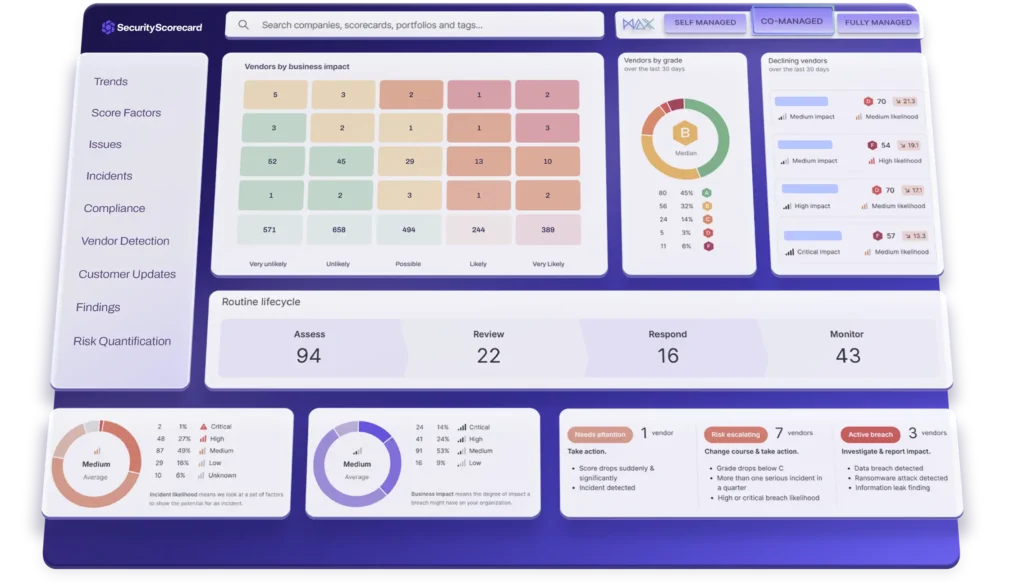
In 2025–2026, effective risk management increasingly uses digital tools and dashboards for live updates, helping organisations conduct regular risk assessments and respond to the risk of a risk occurring before it escalates.

Risk Management in Projects, Finance, and Operations
Project risk management addresses project risks to scope, budget, schedule, and quality. Typical threats include vendor delays, technology failures, regulatory changes, and cyber incidents during rollout. A project manager uses project risk registers, risk workshops, and stage-gate reviews to prioritise risks and ensure mitigation strategies are in place.
Financial risk management covers credit risk (customers not paying), liquidity risk, and market risk (interest rate and FX movements). Practical measures include credit checks, diversification of revenue streams, scenario analysis, and maintaining reserves to protect financial stability and avoid severe financial consequences.
Operational risk management tackles day-to-day process failures, key-person dependency, supply chain disruption, and system downtime. Standard operating procedures, business continuity plans, and incident response plans reduce operational risks and strengthen an organisation’s ability to recover.
A single ransomware attack demonstrates how strategic risks cross all domains-it’s a cyber incident causing operational downtime, financial cost, and reputational harm simultaneously. ERPSM’s cybersecurity assessments and managed security services directly support risk reduction across project, financial, and operational dimensions.
Cyber and Third-Party Risk Management with ERPSM
Since around 2023, AI-powered attacks have made cyber risk a central concern for enterprise risk management. Increased reliance on cloud providers, SaaS platforms, and outsourced IT teams means vendor risk can undermine even well-defended organisations.
Cyber risk management activities include:
- Identifying digital assets, data flows, and critical systems
- Conducting periodic risk assessments-penetration testing, vulnerability scanning, and phishing simulations
- Implementing technical and organisational controls, plus incident response and recovery planning to ensure regulatory compliance
Third-party risk management practices require evaluating suppliers’ security posture before onboarding, including security clauses in contracts, and continuously monitoring vendors for breaches or control failures.
ERPSM’s risk management plan for SMEs and enterprises with limited internal expertise includes:
- Security assessments to identify potential risks and external threats before incidents occur
- Managed detection and response for 24/7 threat monitoring and rapid incident response
- Vendor risk reviews to manage third-party exposure as part of broader supply chain risk management
- Remediation guidance with actionable insights tailored to each organisation’s risk management framework and regulatory requirements
Risk management aims to lower both the likelihood and impact of cyber and operational incidents, and these services make that achievable even for organisations without a dedicated risk management team.
Bringing It All Together: Building a Practical Risk Management Culture
Risk management is an integrated, continuous process linking risk identification, risk assessment, and risk treatment with ongoing monitoring. Effective risk management improves decision-making and organisational resilience-but only when embedded in culture.
Culture starts with leadership:
- Senior management openly discussing risks and trade-offs
- Employees understanding how to report incidents without blame
- Regular training on cybersecurity, fraud awareness, and operational controls
Start small but structured:
- Create a simple risk register covering your top 10 potential threats
- Run at least one formal risk workshop per year and after major incidents
- Review risk appetite and risk acceptance decisions at executive level
- Develop contingency plans for high-impact scenarios
In a digital, AI-driven threat landscape, ignoring cyber risk means accepting preventable financial and operational exposure. Risk management isn’t a project with a finish line-it’s an ongoing discipline that strengthens stakeholder confidence and protects your organisation’s ability to grow.
Consider partnering with ERPSM for cybersecurity assessments and managed security services as part of your broader risk management strategy. A structured approach today prevents costly surprises tomorrow.