

Across Africa, cyber attacks linked to third‑party suppliers, IT vendors, and outsourced service providers have increased sharply. Weak Third‑Party Risk Management (TPRM) has become one of the top causes of data breaches, financial loss, and operational disruption. As organisations digitise procurement, finance, HR, and supply chain systems, attackers increasingly exploit supplier vulnerabilities to gain access. Effective third party risk management is essential to mitigate these risks.
Implementing effective third party risk management practices is critical for safeguarding against potential threats.
Consequently, third party risk management should be a priority as it plays a vital role in protecting sensitive data.
Robust third party risk management strategies can help organizations mitigate potential vulnerabilities.
According to the IBM Cost of a Data Breach Report (2025), 54% of breaches in Africa were caused by third‑party vendors, costing organisations an average of R46 million per incident. This makes TPRM one of the most urgent governance and cybersecurity priorities for African businesses.
To address these challenges, organisations must implement comprehensive third party risk management strategies that include vendor assessment and ongoing monitoring.

Without strong third party risk management measures, businesses face increased exposure to cybersecurity threats.
Why Are African Organisations Vulnerable to Third‑Party Cyber Attacks?
To improve security, organizations must prioritize third party risk management assessments and controls.
1. Over‑reliance on external vendors
Moreover, continuous improvement of third party risk management practices can reduce potential risks significantly.
African organisations outsource IT, cloud hosting, payroll, logistics, and procurement systems. When these suppliers lack strong cybersecurity controls, attackers use them as an entry point.
Effective third party risk management frameworks help organizations align with compliance obligations.
2. Weak due diligence
A 2024 Deloitte Africa survey found that 62% of organisations do not assess vendor cybersecurity before onboarding.
3. Lack of continuous monitoring
Most companies perform one‑time checks, but cyber risk changes daily. Attackers exploit outdated systems, expired certificates, and unpatched software.
4. Limited regulatory enforcement
Unlike Europe’s GDPR, many African countries have slow enforcement of POPIA, NDPR, and data‑protection laws, allowing vendors to operate with weak controls.
Real African Incidents Caused by Weak TPRM
South Africa: Supply Chain Breach Costing Millions
In 2023, a major South African financial institution suffered a breach after a third‑party IT contractor was compromised.
- 2.7 million customer records exposed
- Estimated loss: R68 million
- Root cause: Vendor used outdated remote access software
This incident triggered a national conversation about TPRM maturity in South Africa.
Nigeria: Outsourced Payroll Provider Breach
A Nigerian telecom company experienced a breach through its outsourced payroll vendor.
- 48,000 employee records leaked
- ₦1.2 billion in regulatory penalties and remediation costs
- Cause: Vendor stored sensitive data without encryption
This highlighted the risk of outsourcing HR and finance functions without proper controls.
Kenya: Logistics Vendor Attack Disrupts Supply Chain
A Kenyan retail chain was hit by ransomware after its logistics partner was compromised.
- Operations halted for 5 days
- Losses exceeded KSh 350 million
- Cause: Vendor failed to patch a known vulnerability
This incident demonstrated how supply chain cyber risk can shut down physical operations.
How Weak TPRM Leads to Cyber Attacks
What is the main cause of third‑party cyber breaches in Africa?
Lack of vendor cybersecurity controls, outdated systems, and poor monitoring.
Which industries are most affected?
Banking, telecoms, retail, logistics, and government.
How much do third‑party breaches cost African organisations?
Between R20 million and R80 million per incident, depending on sector and data sensitivity.
Can TPRM prevent these attacks?
Yes. Strong TPRM reduces cyber exposure by up to 65% through continuous monitoring, due diligence, and contractual controls.
How African Organisations Can Strengthen TPRM
1. Conduct vendor cybersecurity assessments
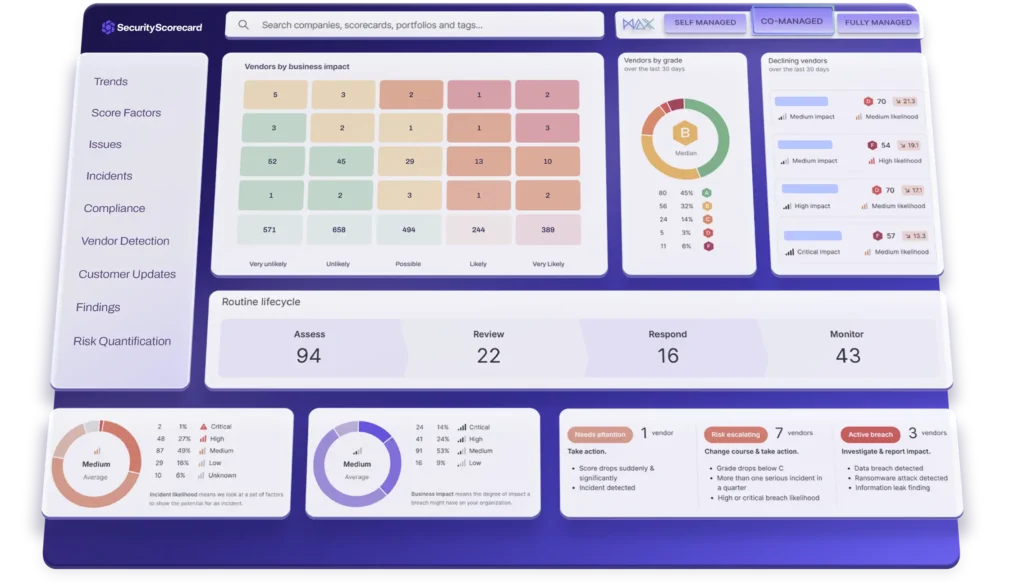
Use tools like SecurityScorecard, or internal questionnaires.
2. Enforce cybersecurity requirements in contracts
Include POPIA, NDPR, ISO 27001, and incident‑reporting clauses.
3. Monitor vendors continuously
Cyber risk changes daily — monitoring must be ongoing.
4. Train procurement teams
Procurement must understand cyber risk, not just pricing.
5. Segment high‑risk vendors
Prioritise IT, cloud, finance, and logistics suppliers.
Strengthen Your TPRM With ERP Software Management
Weak TPRM is one of the biggest threats facing African organisations today. SCMERPSM provides:
- Vendor Risk Management training
- Cybersecurity awareness
- Procurement governance
- CIPS‑aligned professional development
Request your FREE Demo
FAQ: Third‑Party Risk Management (TPRM) in Africa — 10 Questions & Answers
1. What is Third‑Party Risk Management (TPRM)?
Investing in third party risk management solutions can greatly enhance cybersecurity resilience.
TPRM is the process of identifying, assessing, and monitoring risks that come from vendors, suppliers, contractors, and outsourced service providers. It ensures that external partners do not expose an organisation to cyber, operational, financial, or compliance risks.
2. Why are African organisations highly vulnerable to third‑party cyber attacks?
Because many rely heavily on external IT vendors, cloud providers, and outsourced services. A 2025 IBM report shows 54% of African breaches originate from third‑party suppliers, making the region one of the most exposed globally.
3. What industries in Africa are most affected by third‑party cyber breaches?
The highest‑risk sectors include:
- Banking & financial services
- Telecommunications
- Retail & e‑commerce
- Logistics & supply chain
- Government departments These sectors depend heavily on external vendors for IT, data processing, and logistics.
Thus, understanding third party risk management is essential for operational stability.
4. How much does a third‑party cyber breach cost African organisations?
In summary, strong third party risk management can prevent costly breaches and enhance overall security.
African companies lose between R20 million and R80 million per incident. In Nigeria, losses can exceed ₦1 billion, especially when regulatory penalties and downtime are included.
5. What are the most common vendor weaknesses that lead to cyber attacks?
The top vulnerabilities include:
Ultimately, third party risk management must be integrated into the corporate governance framework.
- Outdated software
- Weak passwords
- Poor access controls
- Lack of encryption
- Unpatched systems
- Insecure remote access Attackers exploit these weaknesses to enter the main organisation.
6. How does weak TPRM cause supply chain disruptions?
When a vendor is hit by ransomware or system failure, it can halt logistics, manufacturing, or retail operations. Example: A Kenyan retailer lost KSh 350 million after a logistics vendor breach caused 5 days of downtime.
7. Can TPRM prevent cyber attacks in African organisations?
Yes. Strong TPRM reduces cyber exposure by up to 65% through:
By adopting effective third party risk management practices, organizations can significantly enhance their security posture.
- Continuous monitoring
- Vendor assessments
- Contractual controls
- Cybersecurity audits
- Risk‑based vendor segmentation
Investing in robust third party risk management is a critical step towards safeguarding sensitive information.
8. What is the first step organisations should take to improve TPRM?
Start with a Vendor Risk Assessment (VRA) to identify high‑risk suppliers. This helps organisations prioritise IT vendors, cloud providers, and financial service partners that pose the greatest threat.
9. Are African data‑protection laws strong enough to enforce TPRM?
Partially.
- South Africa (POPIA)
- Nigeria (NDPR)
- Kenya (DPA) These laws exist but enforcement is inconsistent, allowing vendors to operate with weak cybersecurity controls.
Moreover, third party risk management initiatives can help prevent operational disruptions during incidents.
10. Why should procurement teams be trained in TPRM?
Because procurement is responsible for onboarding suppliers. Without training, teams focus on price, not risk. This leads to onboarding vendors with poor cybersecurity, which exposes the entire organisation.
Ultimately, third party risk management is essential for maintaining trust among stakeholders.
Finally, effective third party risk management can save organizations from financial losses.
In conclusion, a strong focus on third party risk management is vital for organizational success.
Therefore, enhancing third party risk management protocols will benefit all stakeholders involved.
To summarize, investing in third party risk management is an investment in the future of your organization.
Consequently, businesses that prioritize third party risk management are better equipped to handle challenges.
Ultimately, effective third party risk management practices lead to enhanced operational resilience.